
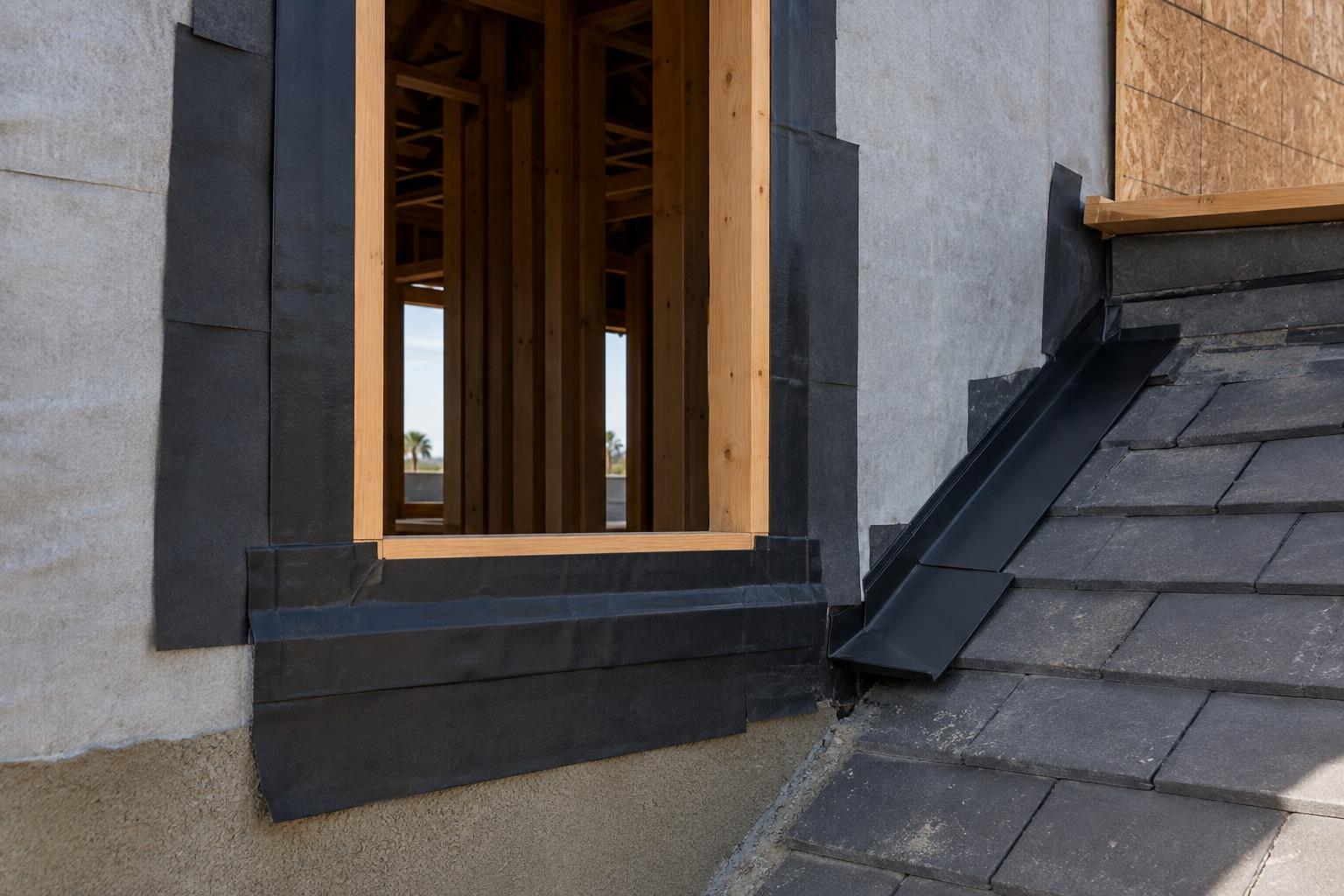
Stucco Waterproofing in Los Angeles, CA
Stucco waterproofing is the detailing work that keeps water out of a plaster wall and gives whatever gets past the surface a way back out. Cement plaster is a reservoir cladding. It absorbs rain, holds it, and releases it, which means the barrier and flashing behind the plaster do the actual weatherproofing. We detail those transitions for building owners, property managers, and general contractors across Los Angeles: roof to wall intersections, window heads and sills, parapets, deck to wall junctions, and the coating decisions that either help a wall dry or seal moisture inside it.
Schedule a Waterproofing Review
Flashing and Barrier Detailing
Los Angeles, CA
Stucco Does Not Keep Water Out. The Details Behind It Do
Los Angeles gets most of its annual rain in a handful of storms, often driven sideways by wind off the ocean, and that pattern hides bad detailing for years. A wall can go three dry seasons without complaint and then take on more water in one February week than it can shed. The failures we are called to are almost never surface failures. They are missing kickout flashing at a roof to wall intersection, a window head with no flashing above it, a parapet with an open joint at the cap, or a deck ledger where the waterproofing membrane died at the wall instead of turning up behind the barrier.
The California Building Code has tightened what a stucco assembly has to do with the water that does get in. Section 2510.6 now requires drainage on the exterior side of the water resistive barrier with a minimum drainage efficiency of ninety percent measured under ASTM E2273 or Annex A2 of ASTM E2925, and a space or drainage material of not less than three sixteenths of an inch behind the plaster. That is a shift in philosophy from resisting water to draining it, and it changes which barrier products and which lath details are acceptable on new Los Angeles construction and on substantial reclads.
Multi family buildings carry an additional obligation that puts wall waterproofing on a calendar. Senate Bill 326 requires inspection of exterior elevated elements in condominium buildings, and Senate Bill 721 covers apartment buildings with three or more units, both on recurring cycles. Balconies, walkways, and stairs fail at the same place stucco walls fail, which is the junction between a horizontal waterproofed surface and a vertical clad one. We do the wall side of that work and coordinate with the deck coating contractor so the two systems overlap in the right order instead of butting at a caulk joint.
Where Stucco Walls Actually Leak
Kickout Flashing at Roof to Wall Intersections
Where a sloped roof dies into a stucco wall, the last piece of step flashing has to divert water out onto the roof surface and away from the wall. Without it, the entire roof plane drains into the plaster at one point. Code calls for the diverter at the lower end of the intersection, and industry practice sets the flashing at least four inches up the sidewall with a diverter angle no sharper than one hundred ten degrees so debris cannot pack it. Metal flashing is corrosion resistant and not less than 0.019 inch.
Window Head Flashing and Sill Pans
A window is a hole in the drainage plane, and it only works if the layers around it are ordered correctly. Head flashing has to go over the nailing flange and under the barrier above, so water coming down the plane is shed outward instead of behind the frame. A sill pan with end dams and a back dam catches whatever gets past the glazing seal and returns it to the face of the wall. On retrofits we open the head and sill rather than assuming the original installer got the sequence right.
Parapets, Caps and Deck to Wall Junctions
Parapets take weather on three surfaces and are the most common source of chronic staining on Los Angeles commercial buildings. The cap has to be continuous, sloped inward, and lapped so joints shed away from the wall, with the barrier carried over the top rather than stopped at the coping. At balconies and walkways the deck membrane must turn up the wall and terminate behind the barrier and lath, not in front of the plaster where a bead of sealant is the only thing holding back standing water.

Coatings That Help a Wall Dry
Elastomeric coatings bridge hairline cracks well, which is why they get sold hard. The tradeoff is vapor permeance. Many elastomerics test below five perms, and a low perm film over a reservoir cladding traps whatever water reaches the plaster from behind. Where a wall has known intrusion or no drainage plane worth the name, we recommend a more permeable acrylic and fix the detail instead of sealing the symptom.
Diagnose Before Prescribing
We do not sell a coating as a leak repair. Before anything gets specified we trace the water path, review the roof and deck interfaces, check moisture where it is warranted, and identify which transition is admitting water. Sometimes the answer is a hundred dollars of sheet metal at one corner. Sometimes it is a reclad. Either way the recommendation follows the diagnosis rather than the product catalog.
Waterproofing Requirements We Detail To
These are the published thresholds that govern water management in a Los Angeles cement plaster assembly.
- Drainage Efficiency
- The California Building Code requires drainage on the exterior side of the barrier with a minimum ninety percent efficiency measured under ASTM E2273 or Annex A2 of ASTM E2925.
- Drainage Gap
- A space or drainage material of not less than three sixteenths of an inch sits on the exterior side of the barrier so water reaching the plane can move down and out.
- Kickout Angle
- Diverter flashing extends at least four inches up the sidewall, with the diverter angle at one hundred ten degrees or wider so debris cannot dam the outlet.
- Flashing Thickness
- Corrosion resistant metal flashing at wall and roof intersections is not less than 0.019 inch, matched to adjacent metals to avoid galvanic problems at fasteners and laps.
- Sill Pan Geometry
- Pans are formed with end dams and a rear upstand so water is contained laterally and cannot run backward onto framing before it drains to the exterior face.
- Lap Direction
- Every horizontal transition is lapped so upper material covers lower material. Reverse laps are the single most common defect we find behind failing stucco on inspection.
- Coating Permeance
- Coating selection accounts for vapor permeance. A film in the range of ten perms or higher lets a plaster wall dry outward, while a low perm elastomeric restricts it.
- Coating Compliance
- Exterior coatings applied in the Los Angeles basin are selected within SCAQMD Rule 1113 volatile organic compound limits for the product category being used.
Our Waterproofing Assessment and Detailing Sequence
Waterproofing work starts with finding the water path. Everything after that is sheet metal, barrier, and sequencing.
Water Path Investigation
We map the building's drainage: roof planes and where they terminate, scupper and downspout discharge, deck slopes, parapet joints, and the elevations that take driven rain. Interior staining is plotted against exterior conditions above it, since water rarely enters where it appears. Where the path is ambiguous we recommend controlled water testing rather than guessing at a repair scope.
Transition Survey
Each critical junction is examined individually: every roof to wall intersection for a diverter, every window head and sill, penetrations for hose bibs, lights and vents, parapet caps and their joints, and deck to wall terminations. We document what is present, what is missing, and what was installed out of sequence, with photographs keyed to an elevation drawing.
Scope and Detail Drawings
Findings become a prioritized scope separating items that stop active intrusion from items that extend service life. For anything nonstandard we produce a sketch showing lap order and material, so the general contractor, the roofer, and the deck contractor are all working from the same sequence rather than three assumptions about who laps over whom.
Targeted Opening and Correction
Correcting a transition means opening the plaster locally to reach the barrier and set new metal behind it. We cut back only as far as the detail requires, install flashing and barrier in the correct order with laps carried past the repair on all sides, and reinstate lath and plaster over the corrected assembly to the surrounding thickness.
Coating and Verification
Once details are corrected and the wall has dried, we specify a coating chosen for permeance and crack bridging rather than by habit, sealing joints at dissimilar materials with the right joint geometry. Where the owner wants verification, we water test the corrected transitions before coating so the result is demonstrated rather than assumed.
Services That Pair With Stucco Waterproofing
Waterproofing touches the roof, the deck, and the plaster at the same time. These are the scopes it is most often coordinated with.
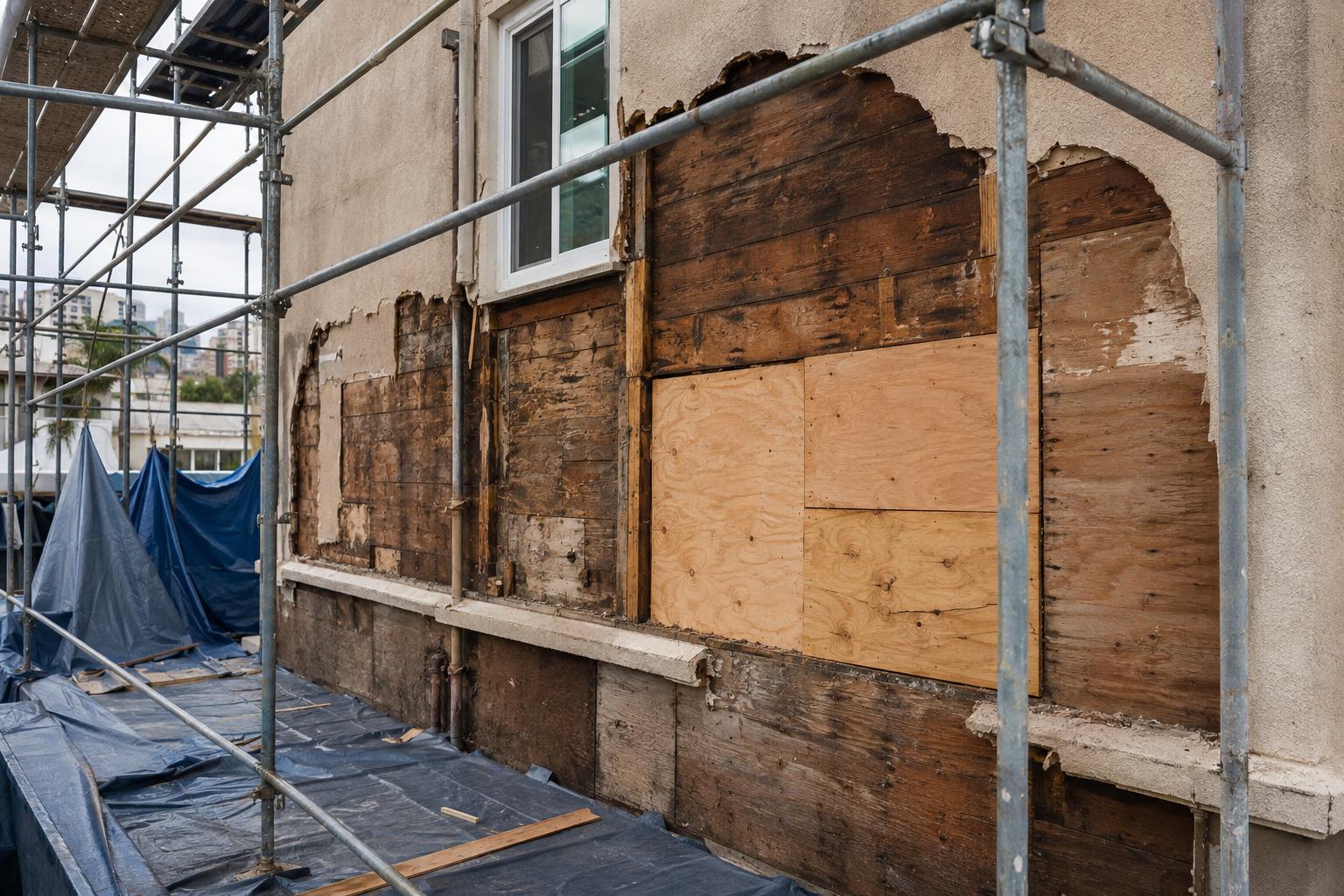
Stucco Removal & Remediation
Full stucco removal and remediation for failed cladding, trapped moisture, and dry rot, including sheathing replacement and a corrected drainage assembly.
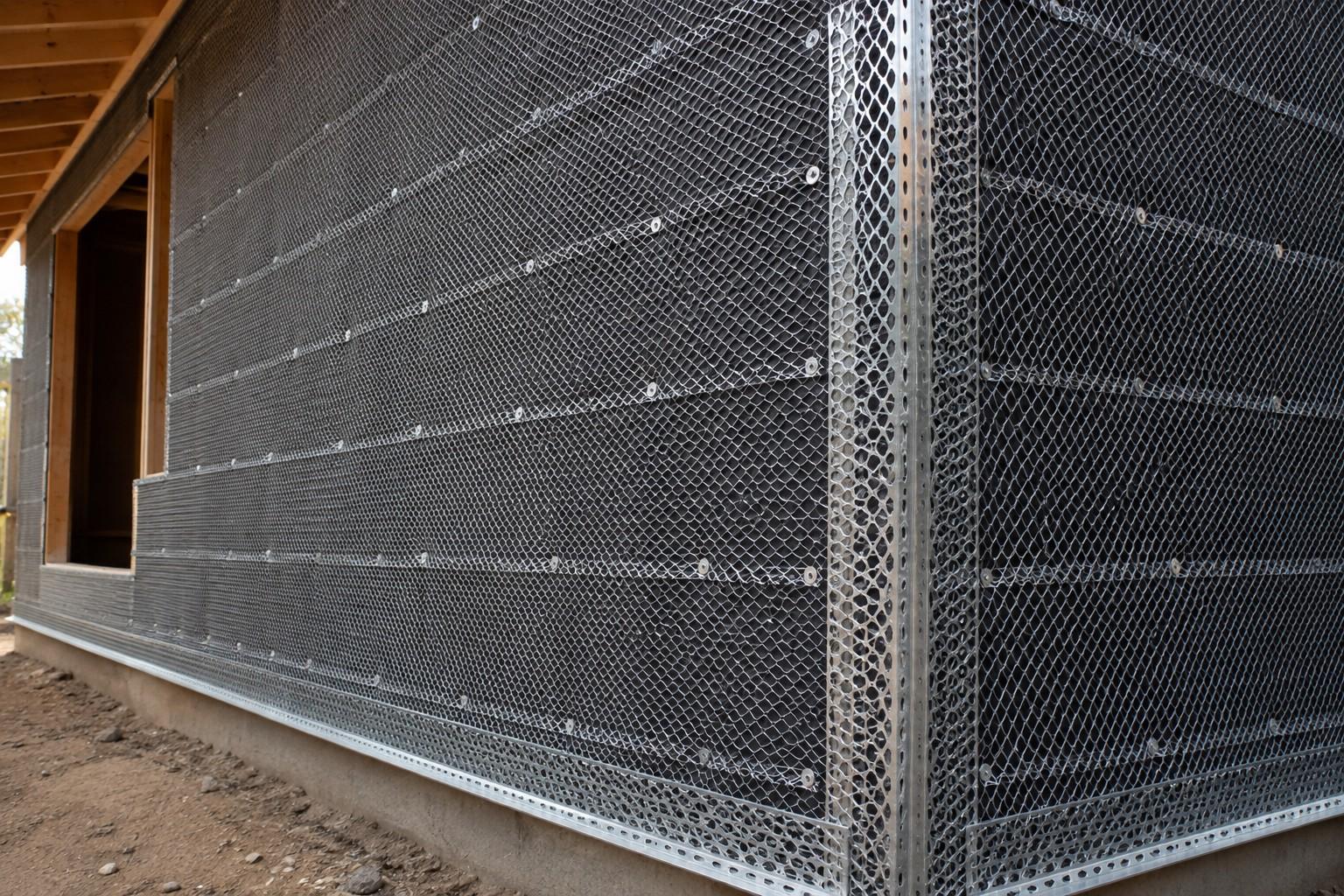
Stucco Lath Installation
Metal lath and stucco mesh installed over two layers of weather-resistive barrier with correct furring, laps, and fastening so the plaster has a code-compliant key.
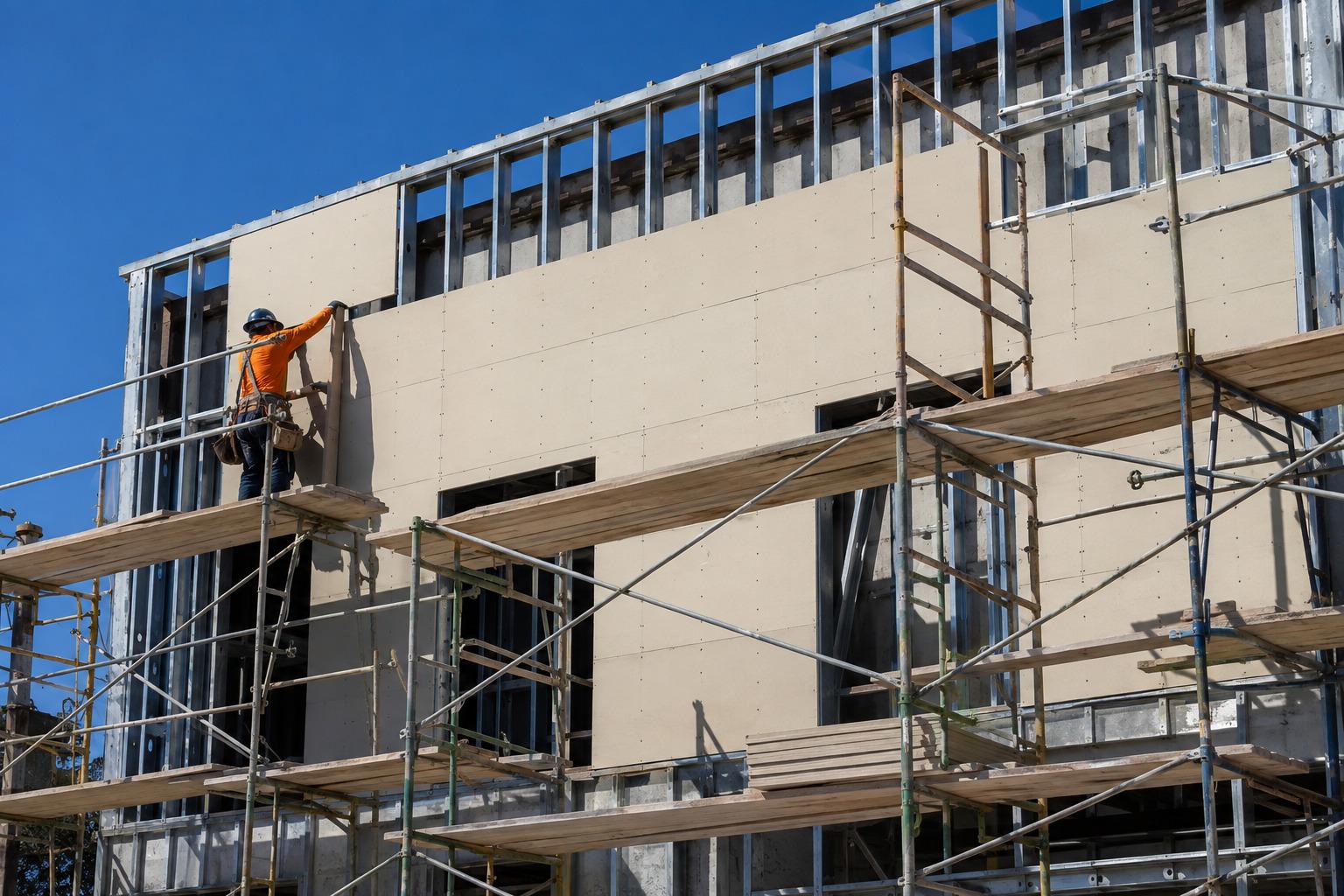
Exterior Gypsum Sheathing
Exterior gypsum sheathing per ASTM C1177, including fire rated and moisture resistant boards, installed as the weather-barrier substrate on steel stud backup walls.

Exterior Painting
Professional exterior painting services for homes and commercial buildings. Surface preparation, priming, and premium paint application for lasting results.
Where We Provide Stucco Waterproofing
We detail and waterproof stucco walls for owners, associations, and managers across Los Angeles County, with a focus on coastal exposures and multi story buildings.
Central Los Angeles
Westside & Beach Cities
San Fernando Valley
South Bay & Long Beach
Orange County
Stucco Waterproofing Questions
Will elastomeric paint stop my stucco from leaking?
What is a kickout flashing and why does its absence matter so much?
How is stucco waterproofing different from stucco repair?
Does my building need work under SB 326 or SB 721?
How much does stucco waterproofing cost in Los Angeles?
Can waterproofing be done without removing the stucco?
Request a Free
Estimate
We are ready to bring your project to life. Reach out for a free estimate on your drywall, framing, or specialty project. Our team responds within 24 hours.