
Commercial Painting in Los Angeles, CA
Commercial painting is scheduled work performed around a business that cannot stop trading. The coating itself is the easy part. The difficulty is delivering it inside an operating office floor, a retail unit with a lease obligated opening time, a distribution building where forklifts run two shifts, or a hotel that has rooms sold for tonight. Los Angeles Drywall & Framing works to a written finish schedule, submits products for approval before mobilizing, and puts crews on the clock the building actually has available. We serve property managers, general contractors, tenant improvement teams, and facility directors across Los Angeles County.
Request a Commercial Proposal
Commercial Finish Work
Los Angeles, CA
Painting Commercial Property Without Closing It
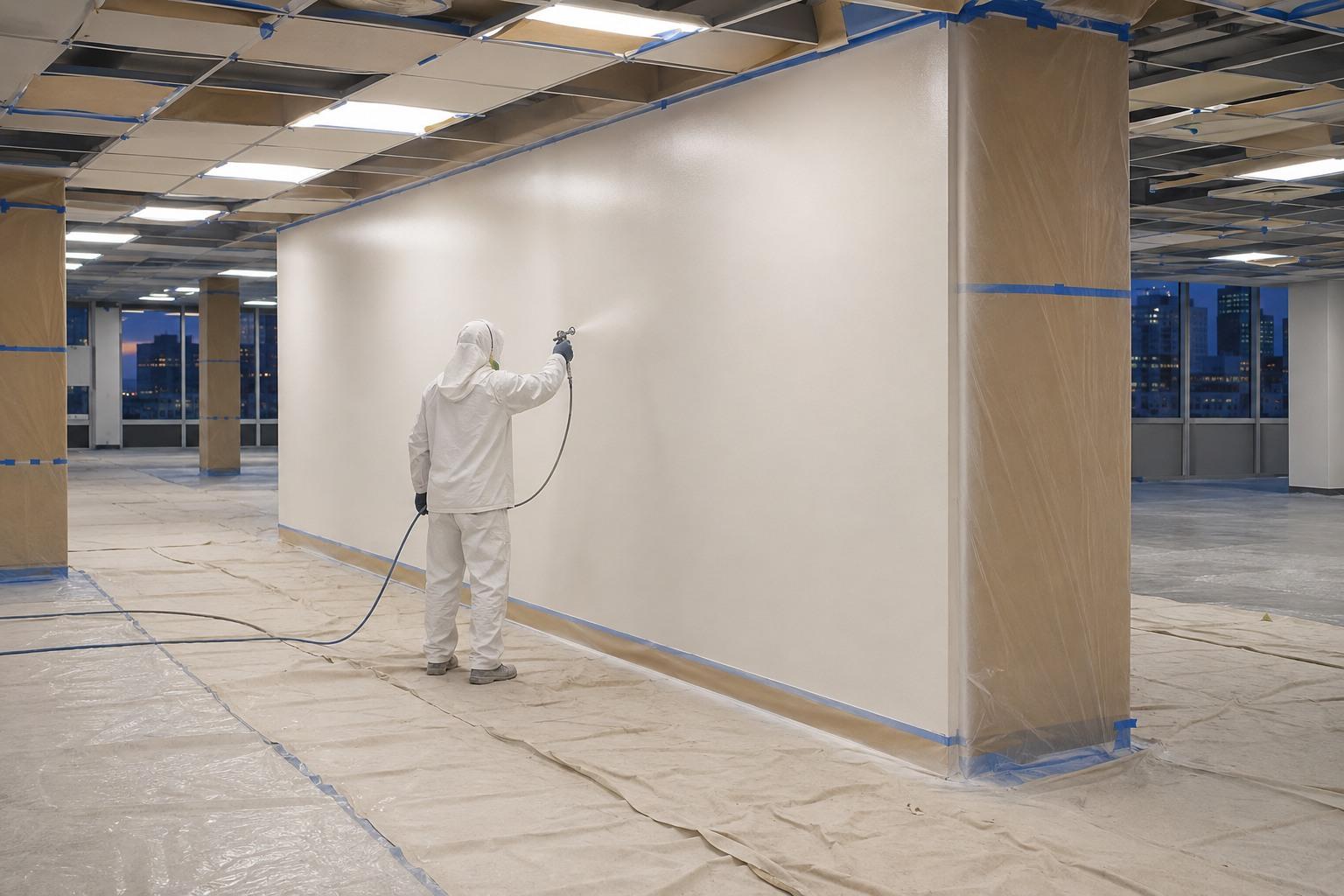
The controlling constraint on nearly every commercial repaint in this market is access, not area. A twelve thousand square foot office floor is a fast job if it is empty and a difficult one if forty people are working in it. We solve that by sizing the crew to the window rather than to the square footage. Common arrangements are second shift starts after close of business, overnight work in retail with the space returned clean and merchandised before doors open, weekend blocks in professional offices, and floor by floor rotation in multi tenant towers where one suite vacates into swing space while its walls are coated. The schedule is the deliverable that everything else hangs from.
Nonresidential work in California carries documentation that residential work does not. CALGreen, Part 11 of Title 24, sets mandatory finish material pollutant control requirements, and Section 5.504.4.3 obliges architectural coatings to meet the Air Resources Board Suggested Control Measure limits unless a more stringent local rule governs, which in the South Coast basin it does. Adhesives, sealants, sealant primers, and caulks are regulated separately under district Rule 1168. Industrial maintenance coatings, the category most steel and equipment finishing falls into, are held to 100 grams of VOC per liter. On projects chasing a green certification these documents are submitted for review rather than merely complied with, and a coating that meets the limit but arrives without paperwork can still hold up a credit.
Because we are a drywall and framing contractor first, our commercial crews arrive able to correct what they find rather than paint around it. Tenant improvement demolition leaves ragged partition ends. Ceiling grid removal leaves torn board at the perimeter. Old signage leaves anchor holes through a corridor wall. Racking impact leaves crushed corner bead down a warehouse aisle. On a painting only contract those become RFIs and delays. On ours the same crew cuts in a patch, blends the texture, and coats it inside the same shift, which is usually the difference between finishing a floor on schedule and handing the general contractor a written reason for the delay he then has to pass upstairs.
Offices, Retail, Industrial and Hospitality
Office and Professional Space
Tenant improvement build outs, lease turnovers, corridor and lobby refreshes, and demising wall work in multi tenant floors. Office work lives and dies on protection: server rooms, workstations, and cabling get isolated before anything opens. Elevator lobbies and shared corridors are treated as landlord scope and coordinated with building management separately from the suite work itself. We plan around badge access, freight elevator reservation windows, and the after hours HVAC surcharge most landlords apply, since that cost belongs in the schedule discussion up front rather than in a change order later.
Retail, Restaurant and Hospitality
These clients measure disruption in lost revenue per hour, so the work happens overnight and the space is handed back trading ready. Restaurants require coordination with health department reopening and the removal of every trace of odor before service. Hotels are worked in blocks of rooms taken out of inventory with the corridor kept fully open, since a guest floor cannot lose its egress path. Brand standard programs are matched to the operator's own specification rather than to a local approximation, because a franchisee inspection will measure the wall against the brand book and not against what looked close on the day.
Industrial and Warehouse
Exposed structure ceilings, deck and joist coating, mezzanines, structural steel, guard rails, bollards, dock equipment, and traffic marked floors. Industrial buildings in Vernon, Commerce, and the South Bay generally cannot clear their floor space, so containment and overspray control determine whether the job is feasible at all. Racking, conveyor, and stored product are sheeted, and coating selection favors products that build in fewer passes, because every additional pass is another hour that aisle stays closed. Lift equipment and fall protection are planned into the sequence rather than improvised once the crew is on site.

Submittals and Mockups
Before mobilization we issue product data sheets, safety data sheets, and VOC documentation for every coating in the specification, along with a finish schedule keyed to the room or elevation. Where the architect requires it we build an approved mockup panel on site and leave it in place for the duration of the contract, so the standard the job is measured against at punch is a physical panel rather than somebody's memory of a meeting.
Licensed, Insured, Prevailing Wage Capable
California Contractor License #1141917, with general liability and workers compensation certificates issued to owner, general contractor, and property manager as required by the contract. We can work under prevailing wage and certified payroll on public and institutional projects, and we carry the safety documentation general contractors ask for at prequalification, including a written injury and illness prevention program and current training records for the crew that will actually be on your site.
Commercial Coating Specifications
Commercial specifications name products, film builds, and preparation standards. These are the ones that come up most often on Los Angeles jobs.
- Dry Fall Coatings
- Sprayed on exposed ceilings, deck, joists, and ductwork. Overspray dries to a sweepable powder within roughly 12 to 15 feet of fall, which is what makes coating open structure practical.
- DTM on Steel
- Direct to metal acrylics are self priming over prepared steel in two coats, each at roughly 2.5 to 4 mils dry film thickness. Over tightly adhering rust the specification calls for a minimum of 6 dry mils total.
- DTM Recoat Window
- DTM acrylic is typically dry to touch in about 30 minutes and recoatable in two hours, which allows two coats on steel inside one night shift. Low temperature and high humidity extend both intervals.
- Surface Preparation Standard
- Repaint scopes are written against a stated degree of surface degradation using Master Painters Institute repainting standards, so the preparation obligation is defined rather than argued over once scaffold is up.
- Odor and Ventilation
- In occupied space we use low odor waterborne systems, run negative air with carbon filtration where required, and coordinate with building engineering to isolate return air from floors outside the work.
- Line Striping and Markings
- Parking structures, dock aprons, and warehouse floors take traffic marking layouts covering stalls, accessible spaces and access aisles, fire lanes, and pedestrian walkways, applied after surrounding coating work.
How a Commercial Painting Project Runs
The order below reflects how commercial work is actually procured and delivered, from prequalification through final acceptance.
Scope Review and Site Survey
We review drawings, the specification section, and the finish schedule, then survey the building after hours so we can see the space in the condition we will be working in. That visit establishes access routes, power availability, freight elevator rules, a storage location for material, and the real condition of the existing coatings, which rarely matches what the drawings imply.
Submittals and Approvals
Product data, safety data, warranty terms, and color drawdowns go to the architect or owner for approval. Mockups are built where specified. In parallel we register insurance certificates with the property manager, submit the site specific safety plan, and clear building requirements such as after hours work permits, elevator protection, or hot work restrictions. Approval turnaround is tracked as a schedule item.
Phasing Plan and Notification
We publish a phase by phase calendar naming which areas are affected on which nights and when each is handed back. Property management distributes it to tenants. Anything that has to move, from monitors to merchandise to pallets, is identified with a named owner and a deadline, so no shift is lost with a crew standing around waiting for somebody to clear a wall.
Preparation and Repair
Areas are protected, existing coatings are washed or degreased, failing material is removed to a sound edge, glossy surfaces are dulled, and substrate damage is corrected by our own drywall and framing crews. Steel is cleaned to the preparation grade the specification names. Every shift ends with the area vacuumed and restored to usable condition before staff or guests return the following morning.
Application, Punch and Closeout
Coatings go on at the specified film build in the specified sequence, with a supervisor verifying wet film thickness with a gauge as the work proceeds rather than after it is dry. The owner or general contractor walks each phase and issues a punch list, which we clear before that phase is invoiced. Closeout includes the as built finish schedule, attic stock, and the written workmanship warranty.
Services That Pair With Commercial Painting
Commercial finish scopes rarely stand alone. These are the trades we most often carry alongside a painting contract.
Commercial Stucco
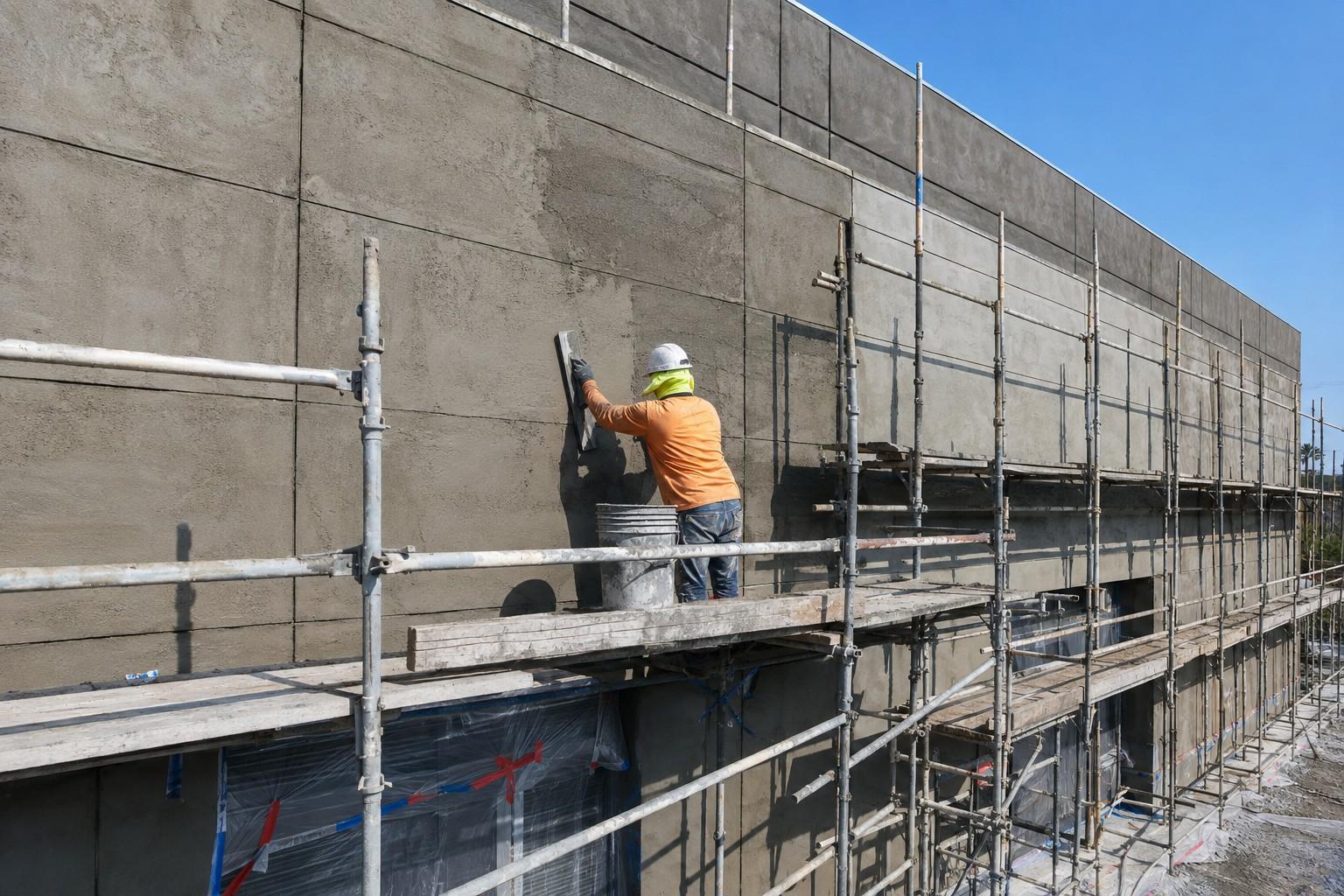
Commercial stucco and cement plaster over steel stud and sheathing assemblies, with control joint layout, colored finish coats, and phased scaffolding schedules.

Exterior Painting
Professional exterior painting services for homes and commercial buildings. Surface preparation, priming, and premium paint application for lasting results.
Multi-Family Painting
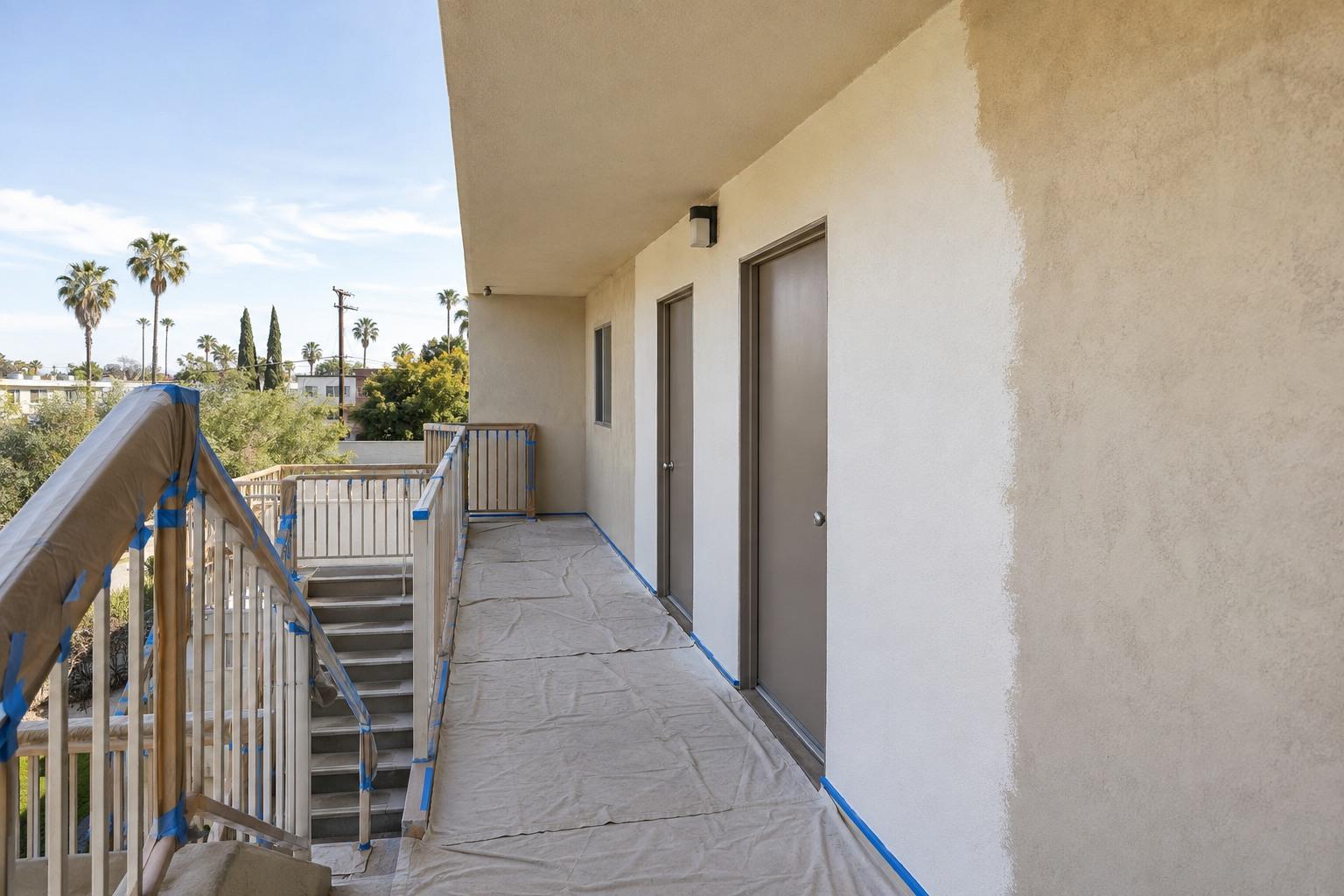
Apartment, condo, and HOA painting programs covering unit turns, corridors, and full exterior repaints, phased so residents keep access throughout.

Commercial Framing
Commercial framing for offices, retail spaces, restaurants, and tenant improvements. Experienced with large-scale projects and tight commercial timelines.
Where We Provide Commercial Painting
We take commercial painting contracts across the Los Angeles basin, including Downtown office towers, retail on the Westside, and industrial buildings in Vernon, Commerce, and the South Bay.
Central Los Angeles
Westside & Beach Cities
San Fernando Valley
South Bay & Long Beach
Orange County
Commercial Painting Questions From LA Property Teams
Can you paint our office at night while we stay open during the day?
What is dry fall paint and when should it be used?
How do you coat structural steel without shutting the building down?
What is included in a commercial paint submittal package?
How much does commercial painting cost per square foot in Los Angeles?
How soon can employees or guests return to a freshly painted space?
Request a Free
Estimate
We are ready to bring your project to life. Reach out for a free estimate on your drywall, framing, or specialty project. Our team responds within 24 hours.