
Stucco Patching in Los Angeles, CA
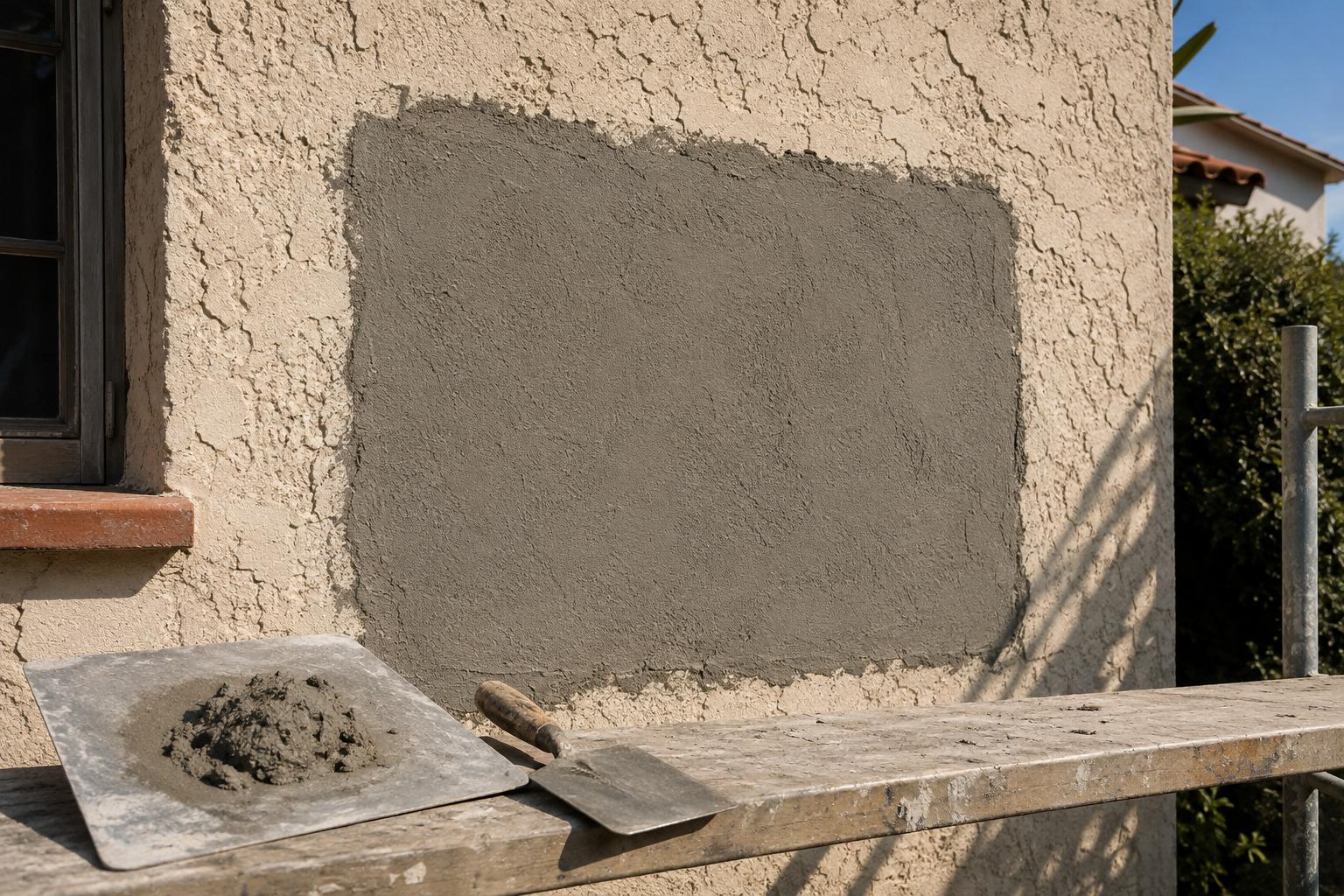
Stucco patching is the targeted repair of a limited area of cement plaster, blended into the surrounding wall so the fix disappears. Most Los Angeles homeowners call us after something else happened: a window was swapped, a copper repipe cut a trench across the side yard, a dry rot section was opened up, or a stair step crack finally got wide enough to notice. We cut back to sound plaster, rebuild the coats to the original thickness, and match the float, dash, or lace pattern already on the house. Patching is a cosmetic to moderate scope, and we will tell you plainly when a wall needs more than a patch.
Get a Stucco Patch Quote
Texture and Color Matching
Los Angeles, CA
Repairs That Blend Into the Wall You Already Have
A patch fails visually long before it fails technically. The usual culprit is flashing: fresh plaster cures lighter and denser than plaster that has been baking on a south wall for forty years, so even a good texture match reads as a bright rectangle for months. We manage that by feathering the finish past the repair boundary, breaking the patch edge at an architectural line where one exists, and planning a coat of exterior paint across the full elevation once the new work has dried. On integrally colored walls we mix control samples and cure them on site for several days before committing anything to the building, because a color that looks right wet is a different color dry.
Not every crack is the same problem. Hairline crazing is shrinkage in the finish coat and is common on Los Angeles walls, particularly after movement on one of the local fault systems. Diagonal cracks running off window and door corners are the wall telling you where stress concentrates, and the California Residential Code answer to that is control joints and casing bead, not more mud. Cracks that step, that offset front to back, or that reappear in the same line within a season point at framing or foundation movement, and the Los Angeles Department of Building and Safety will want that cause identified and corrected before anyone signs off on cosmetic work over the top of it.
Scope discipline separates a lasting patch from a callback. We open the wall far enough to reach plaster still keyed to sound lath, verify the building paper behind the opening is intact and shingled correctly, and lap new barrier over old so water still drains downward and outward. If the paper is torn, the lath is rusted through, or the sheathing is soft, the honest answer is a larger scope, and we would rather say so at the estimate than discover it halfway through demolition with a wall open and a homeowner waiting. Patching is the right tool for a bounded, dry, well understood area of damage and nothing more.
The Patches Los Angeles Homes Actually Need
Patching After Window and Door Replacement
Retrofit windows leave a clean perimeter, but a full frame replacement removes the stucco return and exposes the nailing flange, the paper, and often the original casing bead. We rebuild that perimeter in order: flashing and barrier laps first, then lath tied into the existing mesh, then plaster brought back flush to the frame with a bond break and sealant joint at the metal. Buttering plaster tight to a vinyl frame with no sealant joint is why so many replacement windows in the Valley start leaking within two rainy seasons.
Trench Patching After Plumbing and Electrical
A repipe, a gas line, or a subpanel feed usually leaves a narrow channel through the plaster. Long thin patches are the hardest to hide because they violate the panel proportions plaster wants and they telegraph every stud behind them. We widen the cut to a workable dimension, install self furring lath that laps the existing mesh, and build the base coats in two passes so shrinkage happens before the finish goes on. Where a trench crosses a control joint we stop and reterminate rather than bridging it.
Section Replacement After Dry Rot Repair
When a framer has replaced a rim joist, a header, or a run of sheathing, the plaster contractor inherits an opening with hard edges and mixed substrates. We square the perimeter, confirm the new sheathing sits flush with the old, reinstate two layers of weather resistive barrier lapped shingle fashion over the surrounding paper, and re lath before any plaster goes up. This is the largest scope we still call patching, and it is where the difference between a repair and a cover up shows up later.

Matching Original Texture
Southern California walls carry a small vocabulary of finishes: sand float, dash, lace, skip trowel, and smooth steel trowel. Each one is a hand motion, an aggregate size, and a working time, not a product you buy off a shelf. We take a sample from an inconspicuous elevation, mix to that aggregate, and practice the pattern on a board held against the wall until the shadow lines read the same.
When Patching Is the Wrong Answer
If moisture readings behind the plaster stay elevated after a dry week, if the same crack has been patched twice, or if paper and lath are failing across a whole elevation, a patch only hides the mechanism. We would rather quote the correct scope than sell three repairs that each last a year. At that point the conversation moves to waterproofing detail work at the flashings, or to full removal and a rebuilt drainage assembly.
How We Build a Patch
Repair work follows the same published standards as new plaster. These are the dimensions and cure intervals we hold to on patch scopes.
- Total Thickness
- Three coat plaster over metal lath is a nominal seven eighths inch under ASTM C926: three eighths scratch, three eighths brown, one eighth finish. Patches rebuild to that depth.
- Cut Back Margin
- Plaster comes off back to material still keyed to sound lath, then the opening is squared. Ragged feathered edges delaminate first, so the boundary gets a clean face.
- Lath Lap
- New expanded metal lath laps existing mesh rather than butting it. ASTM C1063 sets a minimum half inch side lap and one inch end lap, tied so patch and field move as one.
- Scratch Cure
- ASTM C926 requires the scratch coat moist cured at least 48 hours before the brown coat. On hot inland walls we fog more often so plaster does not flash set.
- Brown Coat Dry Time
- The brown coat is moist cured at least 48 hours, then allowed to dry before the finish. Rushing that interval is the usual cause of crazing on a fresh patch.
- Paint Coordination
- Fresh plaster is alkaline and must cure before coating. Paint is scheduled after drying, using products within SCAQMD Rule 1113 volatile organic compound limits for the LA basin.
How a Stucco Patch Runs From Estimate to Paint
Most residential patches are a few days of work spread across a week or two, because cure time and drying time cannot be compressed by adding crew.
Walk the Elevation
We look at the damage and then at the whole wall it sits in: crack direction and offset, hollow areas found by sounding the plaster, moisture readings where warranted, and the existing texture and whether color is integral or painted. We also note where control joints, casing bead, and the weep screed sit, because those govern where a patch can honestly stop.
Define the Cut
The removal boundary is marked before a saw comes out, squaring the opening and pushing edges to an architectural break when one is close. Protection goes over hardscape, planting, and glazing below. On homes built before 1980 we coordinate testing rather than cutting blind, since older coatings and adjacent finishes can carry lead or asbestos.
Open and Inspect
Plaster comes off to sound material and the lath and paper behind it get a look before anything goes back. This is where a patch either stays a patch or becomes a bigger conversation. Rusted lath, reverse lapped paper, soft sheathing, or damp framing all change the scope, and we walk the opening with you before proceeding.
Rebuild Barrier, Lath and Base Coats
New weather resistive barrier is woven into the existing layers so drainage stays continuous, then self furring lath is fastened and tied to surrounding mesh. Scratch and brown coats go on with the required cure interval between them, and the brown is rodded flat and true to the existing wall plane so the finish has nothing to hide.
Match the Finish and Blend
The finish coat is mixed to the aggregate and color read from the sample, tested on a board, then applied with the same hand motion as the original texture. We work past the patch line to soften the transition and, where an invisible result matters, coat the elevation corner to corner before hauling debris and cleaning the site.
Services That Pair With Stucco Patching
Patch work rarely stands alone. These are the services homeowners most often pair with a stucco repair, whether the patch is the whole job or the finish step after larger work.

Stucco
Traditional and synthetic stucco application and repair for Los Angeles properties. Weather-resistant finishes that protect and enhance your building exterior.
Stucco Removal & Remediation
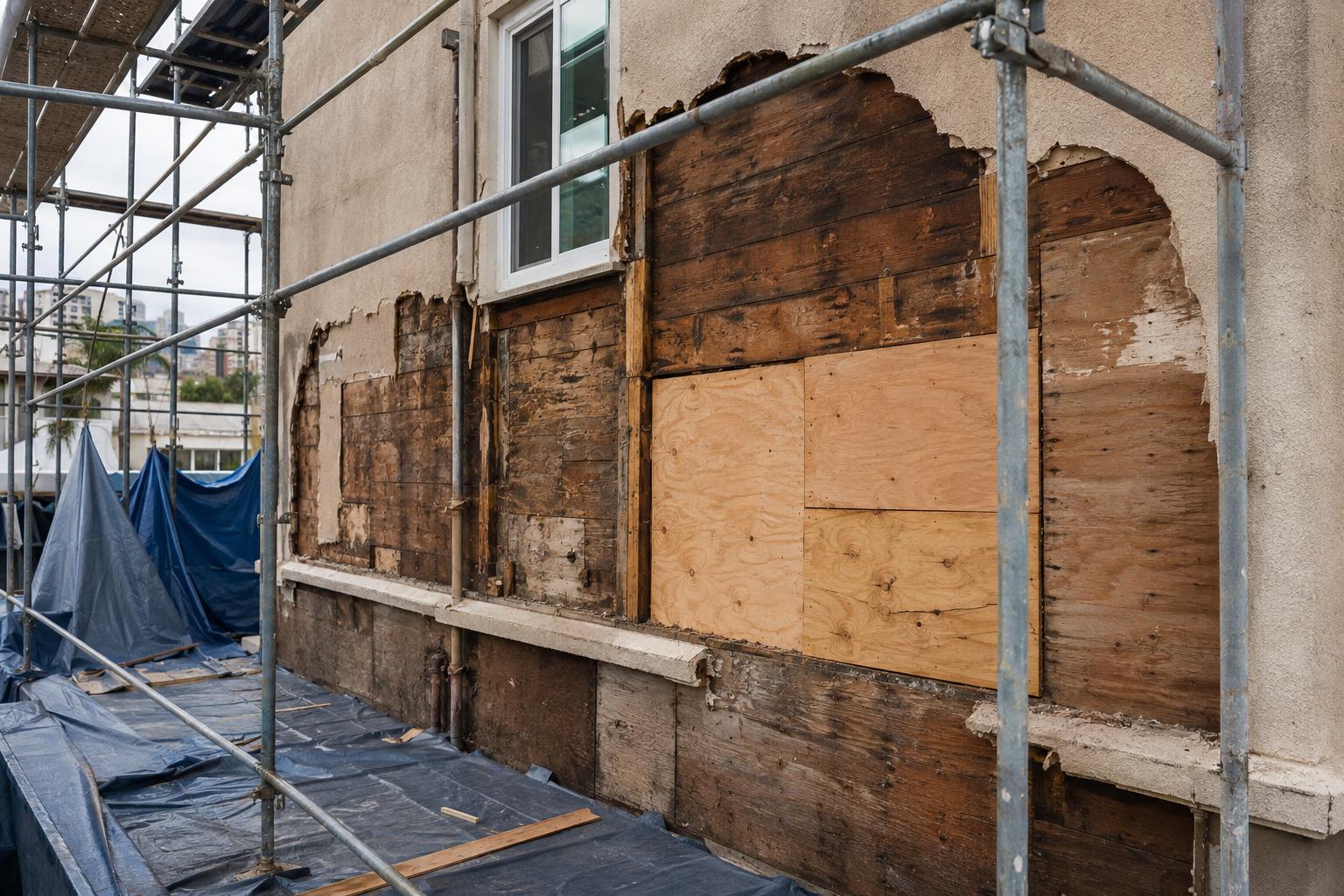
Full stucco removal and remediation for failed cladding, trapped moisture, and dry rot, including sheathing replacement and a corrected drainage assembly.

Exterior Painting
Professional exterior painting services for homes and commercial buildings. Surface preparation, priming, and premium paint application for lasting results.

Drywall Patching
Quick and reliable patching for small holes, nail pops, and minor drywall damage. Seamless repairs that blend perfectly with your existing walls.
Where We Provide Stucco Patching
We patch stucco on single family homes, duplexes, and small apartment buildings across Los Angeles County, from the Westside and South Bay to the San Fernando Valley.
Central Los Angeles
Westside & Beach Cities
San Fernando Valley
South Bay & Long Beach
Orange County
Stucco Patching Questions From Los Angeles Homeowners
Will the patch match my existing stucco exactly?
How much does stucco patching cost in Los Angeles?
What is the difference between stucco patching and stucco remediation?
Do I need a permit to patch stucco in Los Angeles?
Can you patch stucco during winter rain or a summer heat wave?
How long before I can paint a new stucco patch?
Request a Free
Estimate
We are ready to bring your project to life. Reach out for a free estimate on your drywall, framing, or specialty project. Our team responds within 24 hours.