
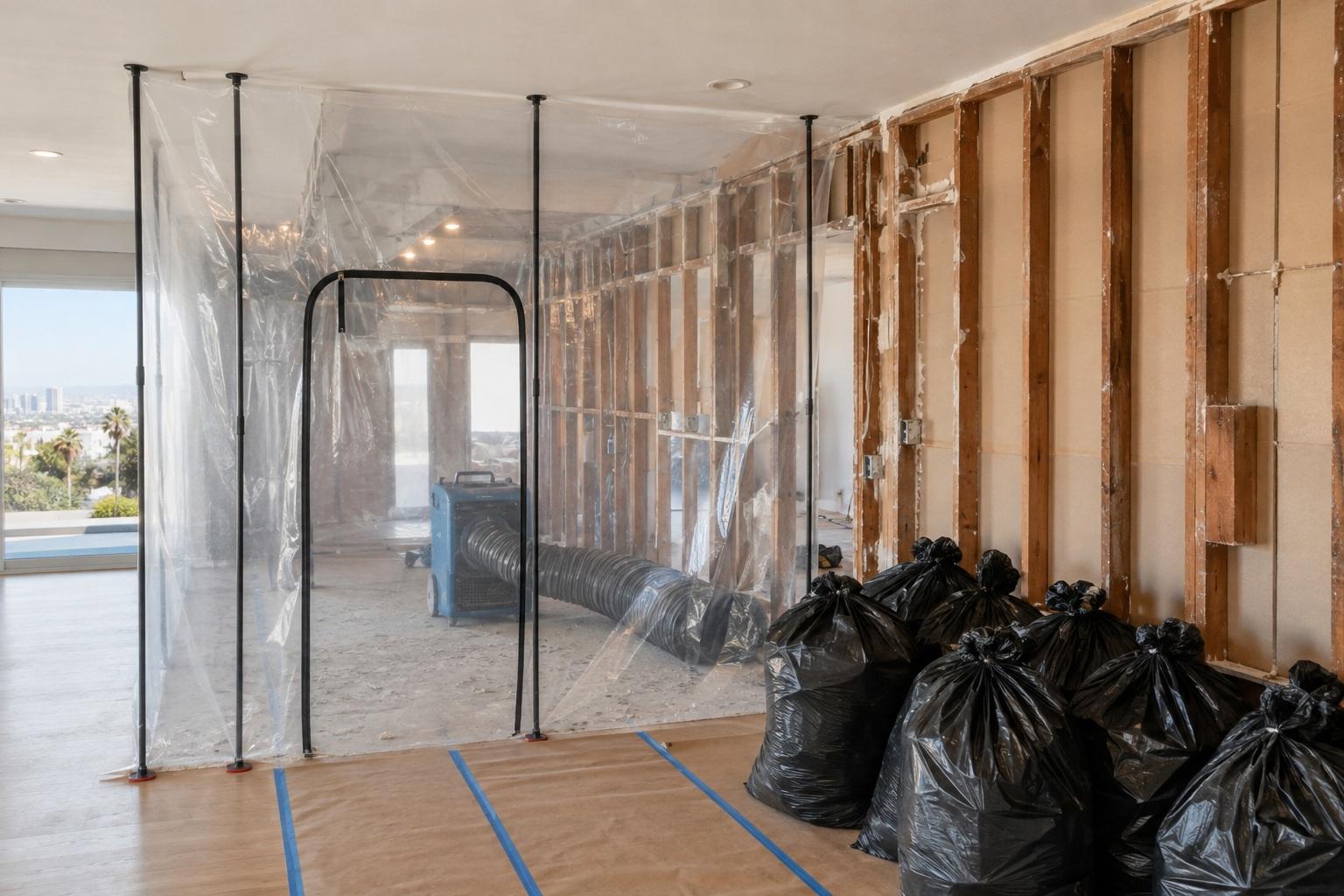
Drywall Demolition in Los Angeles, CA
Drywall demolition is the controlled removal of gypsum board and its fasteners from a building without damaging what stays, without spreading dust into occupied space, and without disturbing a regulated material before anyone has tested for it. Los Angeles Drywall & Framing performs demolition ahead of remodels, tenant improvements, water and fire losses, and full gut renovations across LA County. The work is straightforward on a bare shell and considerably less so in a 1950s Valley apartment with live conduit in the walls and residents in the next unit. We scope it accordingly and price it honestly.
Schedule a Demolition Walk
Contained Tear Out
Los Angeles, CA
Testing Comes First, Then Containment, Then Demolition
The fastest way to turn a two day tear out into a five figure problem is to swing a hammer into material nobody tested. Joint compound, texture, and wall assemblies in older Los Angeles buildings can contain asbestos, and painted surfaces in housing built before 1978 routinely carry lead. Once that material is airborne it is no longer a demolition question, it is a contamination question, and the remediation costs more than the survey ever would have. We do not start a removal scope until the survey results are in hand and, where the results are positive, until a licensed abatement contractor has finished and cleared the area. That sequence protects the owner far more than it protects us.
In the Los Angeles basin this is regulated by South Coast AQMD Rule 1403. The rule requires an asbestos survey report signed by a certified asbestos consultant prior to demolition or renovation activity, with a narrow exception for renovation of a residential single unit dwelling where less than 100 square feet of intact material is removed. It also requires notification to the district ten working days before demolition or removal exceeding 100 square feet, and copies of both the notification and the survey report must be kept at the worksite for the duration of the project. Cal/OSHA adds its own layer under Title 8 Section 1529, which requires registration for asbestos work involving 100 square feet or more.
Lead is regulated separately under Title 8 Section 1532.1, and California tightened those limits substantially effective January 1, 2025, dropping the permissible exposure limit to 10 micrograms per cubic meter as an eight hour average and the action level to 2 micrograms per cubic meter, down from 50 and 30. Practically, that means a demolition scope in an older LA building has to plan for exposure control rather than assume it. We coordinate the testing, we tell you plainly what the results mean for schedule and cost, and we build the containment before the first sheet comes off the studs rather than after somebody notices dust in the next unit.
Containment, Negative Air, and Protecting What Stays
Dust Containment and Negative Air
Gypsum dust travels through a building along every path air takes, and it settles on everything it reaches. We isolate the work area with sealed poly barriers and zippered entries, seal supply and return registers so the HVAC system does not distribute the dust through the rest of the building, and run HEPA filtered negative air machines so the pressure differential pulls air into the work zone rather than out of it. Debris is bagged inside containment and carried out through a controlled path, not dragged across finished floors.
Protecting Wiring, Piping, and Ducts
Everything a wall hides gets hit by careless demolition: romex staples torn out of studs, copper supply lines nicked by a reciprocating saw, condensate lines crushed, fire sprinkler drops bent, and low voltage runs cut with no way to identify them afterward. We score and pull board by hand around known service locations, cut in controlled depth so blades never reach past the board thickness, and photograph the open cavity before anything is closed back up so the trades that follow know exactly what is in there.
Debris Hauling and Recycling
Gypsum is heavy, it fills a bin fast, and in California it cannot simply go to landfill without accounting. CALGreen Section 4.408 requires at least 65 percent of construction and demolition waste to be diverted through recycling, salvage, or reuse, supported by a waste management plan signed by the owner before the permit issues. Section 4.408.4 offers an alternative compliance path for projects that keep landfilled debris under 3.4 pounds per square foot of building area. We haul to facilities that issue the tickets your inspector will ask for.

Survey and Notification Handled
We coordinate the certified asbestos survey, help assemble the Rule 1403 notification, and hold the schedule around the ten working day notification window so the demolition date on the program is a realistic one. Copies of the survey and the notification stay on site for the duration. Where results come back positive we step aside for the abatement contractor and pick the scope back up once the area has been cleared.
Selective Versus Full Removal
Not every job needs a gut. We regularly cut back to the nearest framing member above a water line, remove a single face of a partition to give the plumber access, or take a wall to four feet and leave the rest. Selective removal keeps more of the existing finish, shrinks disposal volume, and lowers cost, though it demands cleaner cut lines and considerably more careful hand work per square foot.
The Regulatory and Site Conditions That Set the Scope
Demolition pricing in Los Angeles is driven less by square footage than by the conditions below. These are what we establish during the walk.
- SCAQMD Rule 1403
- Requires an asbestos survey report signed by a certified consultant before demolition or renovation, and notification to the district ten working days ahead of any demolition or removal exceeding 100 square feet.
- Survey Exception
- Rule 1403 exempts renovation of a residential single unit dwelling where less than 100 square feet of intact material is removed or stripped. Damaged material and larger scopes fall outside that exception.
- 8 CCR 1532.1
- The Cal/OSHA lead standard. Since January 1, 2025 the permissible exposure limit is 10 micrograms per cubic meter as an eight hour average, with an action level of 2. Registration under Section 1529 covers asbestos separately.
- CALGreen 4.408
- Requires a minimum 65 percent diversion of construction and demolition waste from landfill through recycling, salvage, or reuse, documented by a waste management plan and verified with facility tickets or reports.
- Occupancy Status
- Occupied buildings need containment, protected egress paths, restricted work hours, and daily cleanup. An empty shell allows faster, more aggressive removal and a materially lower unit price for the same square footage.
- Assembly Depth
- Single layer board on wood studs comes off quickly. Multi layer rated assemblies, board over lath, board glued to concrete or masonry, and walls with wire mesh behind them take several times the labor per square foot.
How We Run a Drywall Removal Project
The order of operations is what keeps a demolition scope from becoming somebody else's problem later.
Walk, Test, and Notify
We walk the space, identify the age of the construction and the materials likely to be regulated, and coordinate the certified asbestos survey and lead testing. Results drive everything downstream. Where notification to the air district is required we build the window into the schedule instead of discovering it the week of the tear out, and positive results go to a licensed abatement contractor before we set foot on the wall.
Isolate and Protect
Utilities serving the work area are located and shut down where appropriate, and circuits get identified rather than guessed at. Floors, stairs, elevators, and adjacent finishes are covered along the full debris route. Poly containment goes up with sealed seams and a zippered entry, registers are sealed, and HEPA filtered negative air machines are set so air moves into the work area only.
Remove in Controlled Sections
Board comes off in planned sections rather than randomly. Screws and nails are pulled or driven flush so the framing is clean and safe for the next trade. Around known electrical, plumbing, and mechanical runs the work goes to hand tools. Where the scope is selective, we snap clean lines at framing members so new board lands on solid backing rather than on a ragged edge floating in the cavity.
Sort, Bag, and Haul
Gypsum, metal, and wood are separated at the source, because sorting on site is what makes the diversion numbers achievable and the recycling tickets legitimate. Debris is bagged or binned inside containment and moved out along the protected path. We size and stage the bin for the site, which on a tight Westside street is a scheduling problem as much as a logistics one.
Clean, Document, Hand Off
The area is HEPA vacuumed and wiped down rather than swept, containment comes down last, and the exposed framing gets photographed with the utility locations visible. We hand over the disposal and recycling documentation for the CALGreen submittal and leave an open, clean, measured cavity that the framing, electrical, and drywall trades can start on immediately without a second cleanup.
Services That Pair With Drywall Demolition
Demolition is the first step in a larger scope. These are the services that most often follow a tear out on the same project.

Drywall Installation
Complete drywall installation for new construction and renovation projects. Board hanging, fastening, and preparation for residential and commercial spaces across Los Angeles.
Fire Rebuild Construction
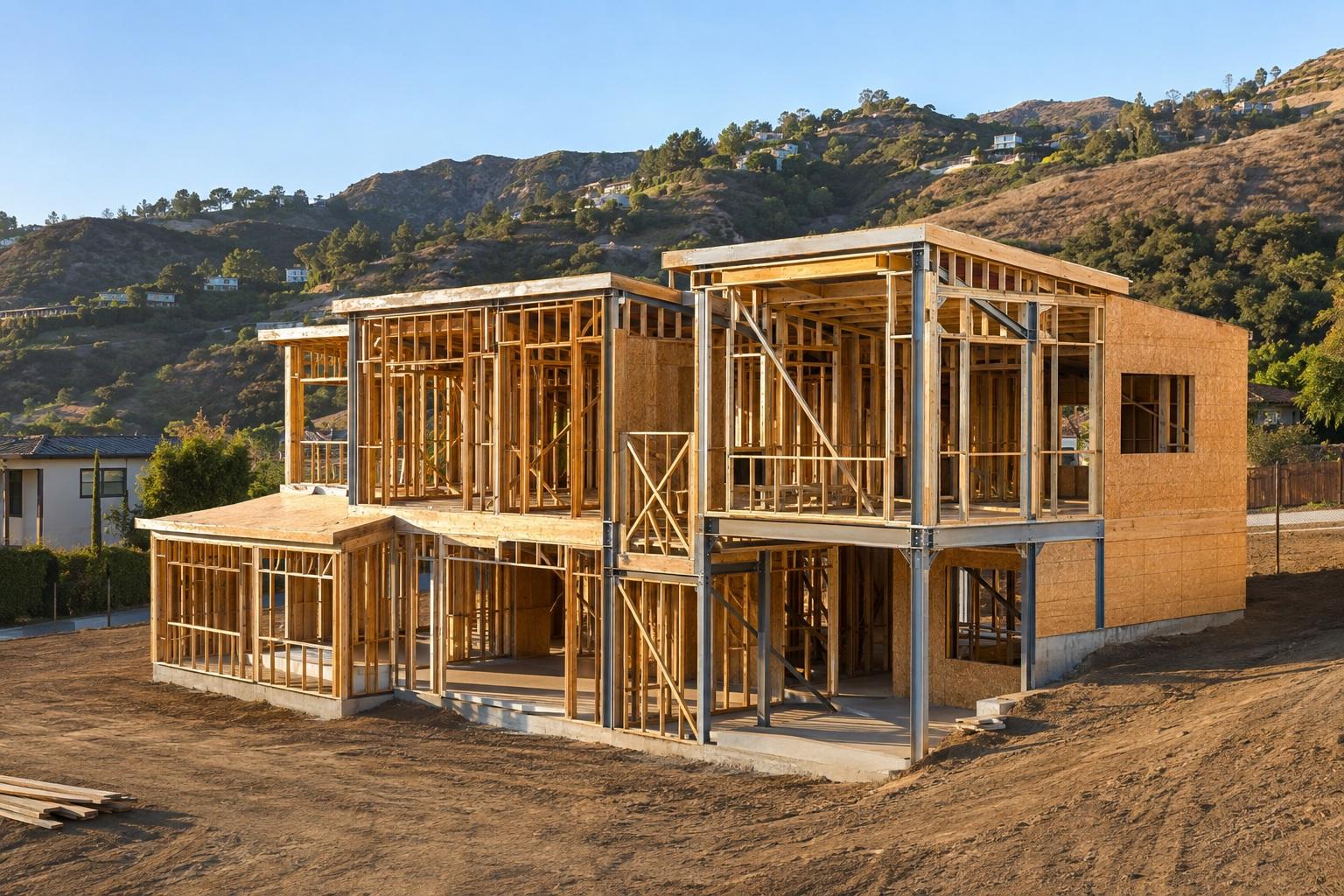
Framing, drywall, stucco, and paint for Palisades, Eaton, and Malibu fire rebuilds, built to Chapter 7A and the 2026 Wildland-Urban Interface code.

Drywall Repair
Expert drywall repair for water damage, holes, cracks, and general wear. Fast turnaround to restore your walls to their original condition throughout the LA area.
Stucco Removal & Remediation
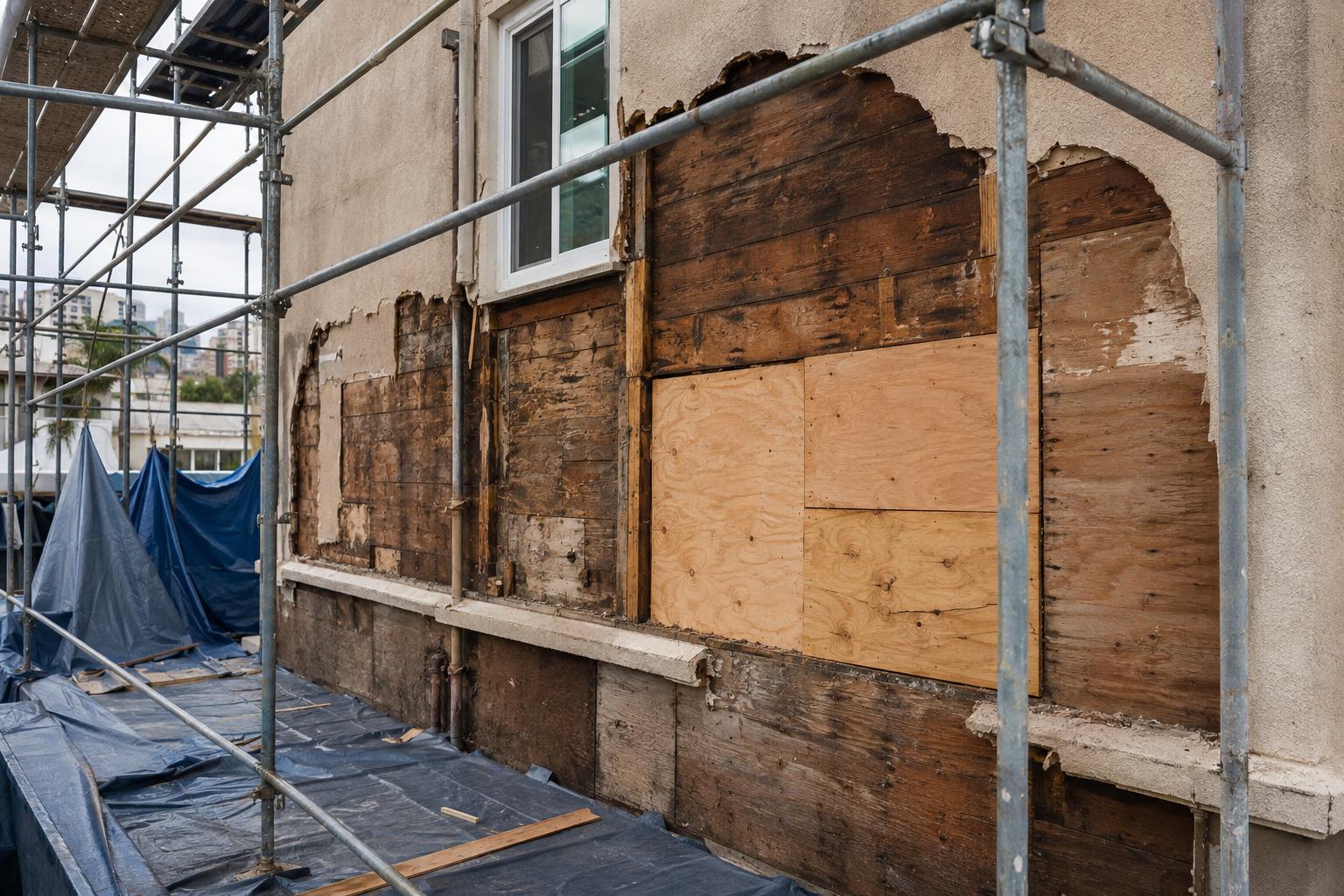
Full stucco removal and remediation for failed cladding, trapped moisture, and dry rot, including sheathing replacement and a corrected drainage assembly.
Where We Provide Drywall Demolition
We perform contained drywall demolition and debris removal for residential, commercial, and multi family properties across the Los Angeles region.
Central Los Angeles
Westside & Beach Cities
San Fernando Valley
South Bay & Long Beach
Orange County
Drywall Demolition Questions
Do I need an asbestos test before removing drywall in Los Angeles?
What does drywall demolition cost in the LA area?
How do you keep drywall dust out of the rest of the building?
Can you remove just part of a wall instead of the whole thing?
What happens if the lab results come back positive for asbestos or lead?
Do you haul away the debris and provide recycling documentation?
Request a Free
Estimate
We are ready to bring your project to life. Reach out for a free estimate on your drywall, framing, or specialty project. Our team responds within 24 hours.